


Introduction
Awamori is a traditional distilled spirit that has been cherished in Okinawa for centuries. Renowned for its rich flavor, distinctive aroma, and the mellow character it develops through long-term aging, Awamori is far more than just an alcoholic beverage—it is a symbol of Okinawa’s history, culture, and heritage. This article explores the history of Awamori from its origins to the present day, providing a clear and accessible overview of its remarkable journey through the ages.
The Origins of Awamori: Maritime Trade with Southeast Asia and China
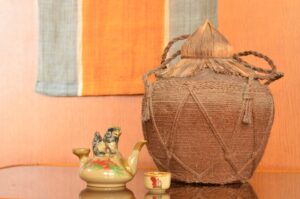
The roots of Awamori can be traced back to the 15th-century Ryukyu Kingdom. During this era, the kingdom maintained thriving trade relations with Southeast Asia, China, Japan, and Korea through a commercial network known as entrepôt trade. It was through these exchanges that distillation techniques from Siam (present-day Thailand) were introduced to the Ryukyu Islands, laying the foundation for what would later become Awamori.
The Ryukyu Kingdom and the Development of Awamori
In the Ryukyu Kingdom, awamori production was strictly regulated by the royal government. In particular, only residents of three districts in Shuri—Akata, Sakiyama, and Torihori, collectively known as Shuri Sanka—were permitted to produce awamori. Serving as official distillers to the royal court (Goyō Shuzō), they presented awamori to members of the royal family and government officials, cementing its status as the kingdom’s “royal liquor.”
Subsequently, awamori was used as a diplomatic gift by the royal government and became an important part of the kingdom’s diplomatic exchanges with foreign nations. This practice demonstrates the esteemed status that awamori held within Ryukyuan society and highlights its deep cultural significance.
The Meiji Restoration and the Privatization of Awamori
In the late nineteenth century, the Ryukyu Kingdom was incorporated into Japan through the Ryukyu Disposition and became Okinawa Prefecture. As a result, awamori production was opened to the private sector. Previously a monopoly of the royal government, awamori could now be produced and sold by the general public.
Initially, however, inadequate production techniques and inconsistencies in quality became significant challenges, leading to a temporary decline in the reputation of awamori. In response, skilled distillers from the former Shuri Sanka districts played a central role in passing down traditional production methods and promoting quality-control practices.
World War II and the Crisis of Awamori
The devastating impact of the Battle of Okinawa had a profound effect on the awamori industry. Many distilleries were destroyed during the war, and essential raw materials and production equipment were lost. For a time, awamori production became virtually impossible.
However, with Okinawa’s postwar reconstruction, awamori was revived through the efforts of the Okinawan people. In particular, the presence of U.S. military personnel in Okinawa led to awamori being introduced to foreign consumers, contributing to a renewed appreciation of the spirit both in Japan and abroad.
From the Postwar Era to the Present: The Establishment of Kuusu (Aged Awamori) Culture
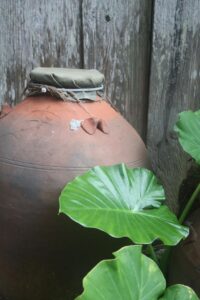
From the Postwar Era to the Present: The Establishment of Kūsu (Aged Awamori) CultureOne of the most distinctive features of awamori is its tradition of kūsu (aged awamori). Through long-term aging, awamori develops a smoother character and greater depth of flavor, increasing both its quality and value. As the quality of awamori continued to improve in the postwar era, expressions such as 10-year and 20-year kūsu emerged, firmly establishing awamori’s reputation as a premium spirit.
In addition, individual distilleries refined their own aging and blending techniques. As a result, awamori has evolved beyond a regional alcoholic beverage and has secured a lasting position as a culturally significant spirit with a rich heritage.
Awamori Goes Global: Expanding onto the World Stage
In the twenty-first century, awamori began expanding its presence with an eye toward the global market. An increasing number of distilleries received awards at international spirits competitions, helping to raise awareness of awamori in countries such as Thailand, Taiwan, and the United States. The growth of inbound tourism has also contributed to its popularity among international visitors to Okinawa.
In addition, awamori’s value as a regional brand has been increasingly recognized from broader social perspectives, including its contribution to the Sustainable Development Goals (SDGs) and the revitalization of local economies.
Conclusion: Awamori Connecting the Past and the Future
Awamori is more than just a distilled spirit. It is a mirror that reflects the history, culture, and daily lives of the people of Ryukyu. Despite the challenges brought by war and social change, the tradition of awamori has been carefully preserved and passed down through generations by the people of Okinawa, and it will undoubtedly continue to be inherited by future generations.
Why not pour yourself a glass of awamori and experience the timeless story of Ryukyu for yourself?


 JA
JA EN
EN CN
CN KO
KO